
Why Voice Calls Have a Trust Problem
Voice is still the most direct channel between a business and its customers. Yet most people now hesitate to answer a number they do not recognise. Spam, robocalls and spoofed numbers have taught subscribers to let unknown calls ring out, and that hurts everyone: banks, delivery firms, healthcare providers and the operator whose network carries the call.
For a Communication Service Provider (CSP), this is both a risk and an opportunity. Unchecked spam damages brand perception and invites regulatory pressure. A trusted calling experience, on the other hand, becomes a service enterprises will pay for.
What Is Branded Calling?
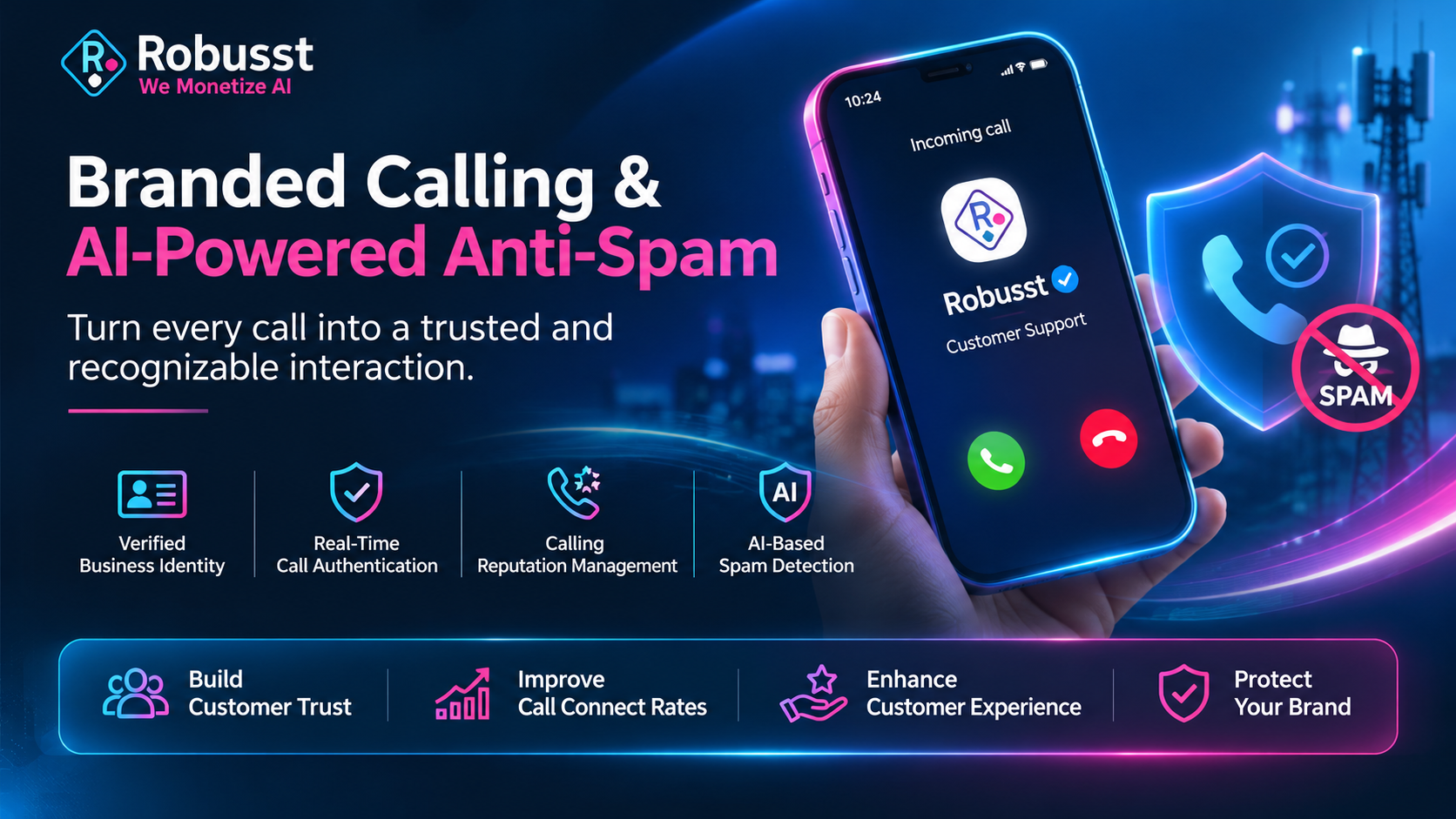
Branded calling, often delivered as Calling Name Presentation (CNAP) or enriched call display, attaches a verified caller identity to an outbound call. Depending on the handset and network, the subscriber may see the business name, logo, and a reason for calling.
How Branded Calling Works
- The enterprise registers and verifies its brand identity and numbers with the operator.
- The operator's platform authenticates the call at origination.
- The verified name, and where supported the logo and call reason, are delivered to the recipient's device.
What Is Anti-Spam for Telecom Networks?
Anti-spam, also called anti-fraud voice filtering, analyses call patterns in real time to find suspicious behaviour such as high-volume short calls, number spoofing and wangiri-style callback fraud. Calls can then be blocked, labelled or redirected according to operator policy.
Signals Used to Detect Spam Calls
- Call volume and burst patterns from a single source
- Very short call durations and low answer ratios
- Mismatch between the displayed number and its network origin
- Subscriber reports and reputation scores
- Machine learning models trained on known fraud behaviour
Why Branded Calling and Anti-Spam Work Best Together
Branded calling tells subscribers which calls to trust. Anti-spam removes the calls they should not trust. Deployed as one programme, the operator can promise subscribers a cleaner inbox of calls and promise enterprises that their genuine calls will be recognised.
Practical Use Cases
- Banking and fintech: verified identity on fraud alerts and collections calls reduces customer confusion and impersonation risk.
- Delivery and logistics: customers recognise the courier instead of ignoring an unknown number.
- Healthcare: appointment and follow-up calls are answered more reliably.
- Government and utilities: official outreach is distinguished from scam calls.
Business Benefits for Telecom Operators
- New revenue: enterprises subscribe to branded calling as a managed service.
- Lower churn: subscribers who feel protected are less likely to leave.
- Regulatory alignment: supports national anti-fraud and caller-ID authenticity initiatives.
- Lower fraud losses: blocking spoofed and illegal traffic protects both subscribers and interconnect revenue.
How Robusst Helps
Robusst delivers Branded Calling and Anti-Spam as an AI-driven solution built for operators, with enterprise onboarding, real-time analytics and flexible monetisation models. Operators including those across Africa and the Middle East work with Robusst on telecom monetisation programmes.
Frequently Asked Questions
What is branded calling? Branded calling displays a verified business name, and in some deployments a logo and call reason, on the recipient's phone so they can recognise who is calling.
How is branded calling different from caller ID? Standard caller ID shows only a number or a name stored in the recipient's contacts. Branded calling shows an identity verified by the operator.
Can anti-spam block legitimate calls by mistake? False positives are possible, which is why good platforms combine multiple signals, allow whitelisting for verified enterprises and let operators tune policies.
How do operators make money from branded calling? By charging enterprises for registration and verified display, usually as a subscription or per-call model, while anti-spam strengthens the value of the subscriber experience.
Does branded calling work on every phone? Display of logos and call reasons depends on handset and network support. Name display works more broadly.
Conclusion
Trust is now the most valuable feature of a phone call. Operators that combine branded calling with intelligent anti-spam protect subscribers and create a revenue stream enterprises genuinely want.
Ready to rebuild trust in your voice network? Contact Robusst at contact@robusst.com to request a Branded Calling and Anti-Spam demo.